

♥ Wishlist
Compare 22 verified Hair Fall Control Products for Everyday Hair Care products in India. Reviews, ratings, pros, cons and buying advice updated for September 2026.


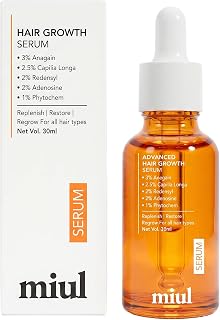


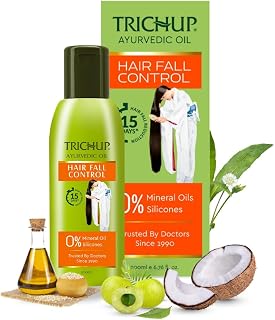


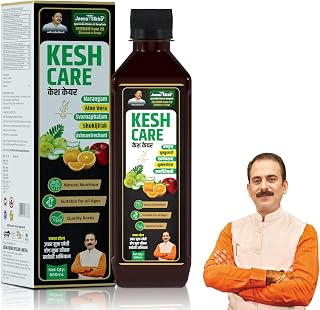


Hair fall can have many different causes, so choosing a product simply because it is labelled “anti-hair fall” is rarely enough. A useful buying decision starts with identifying what you actually want the product to do: reduce hair breakage, improve scalp care, support healthier-looking hair, control dryness, manage excess oil, or complement a broader hair-care routine.
For shoppers in India, product selection also needs to account for climate, washing frequency, scalp type, hair texture, ingredient preferences and how a product fits into an existing routine. Oils, shampoos, conditioners, serums, scalp treatments, herbal preparations and nutritional products are not interchangeable. Each category has a different purpose.
Not every strand found on a pillow, comb or bathroom floor represents the same problem. Hair naturally sheds as part of its growth cycle, while breakage occurs when the hair shaft snaps. Excessive shedding and breakage can look similar but may require very different approaches.
A hair-care product can be useful for improving scalp or hair condition, but consumers should be cautious about products that promise to treat every possible cause of hair loss. A cosmetic product should not automatically be considered a treatment for an underlying medical condition.
Shampoo is primarily a cleansing product. It removes sebum, sweat, environmental residue and styling-product buildup from the scalp and hair. Some shampoos are marketed specifically for hair fall control and may include botanical extracts, conditioning ingredients or scalp-focused formulations.
When comparing shampoos, look beyond the words “anti-hair fall” on the front label. Consider whether the cleansing strength suits your scalp, whether the formulation leaves your hair excessively dry, and whether the ingredients are compatible with the rest of your routine.
Popular Indian and international brands such as Mamaearth, WOW Skin Science, Khadi Natural, Biotique, Himalaya, Dove, L'Oréal Paris and Tresemme offer different hair-care formulations. Availability, formulation and packaging can vary, so check the current product label before purchasing.
Hair oils are particularly common in Indian hair-care routines. Depending on the formulation, an oil may help lubricate the hair, reduce the feeling of dryness and make hair easier to manage. Oils can also form part of a traditional scalp-massage routine.
Common ingredients include coconut oil, sesame oil, almond oil, amla, bhringraj, onion-derived ingredients and various botanical extracts. However, the presence of a traditional ingredient does not by itself prove that a particular product will stop hair loss.
When comparing oils, examine the ingredient list, intended application, texture and whether the formulation is designed primarily for the scalp, lengths of hair, or both.
Serums are often selected when shoppers want a lightweight product that can be incorporated into a routine without the heavier feel associated with traditional oils. Hair serums may focus on smoothness and manageability, while scalp serums are more directly marketed toward scalp care.
Pay particular attention to application instructions. A product intended for the scalp should not automatically be used on the hair lengths, and a silicone-based finishing serum should not be confused with a scalp treatment.
Conditioners and masks are not usually the first products shoppers think of when searching for hair fall control, but they can be relevant when breakage and dryness are part of the problem. Improving slip and reducing friction during detangling can make hair easier to handle.
For dry or chemically treated hair, a suitable conditioner may be more useful than adding multiple scalp products. Look for formulations that match the hair's condition rather than selecting a product solely because the packaging mentions hair fall.
Herbal hair-care products are widely available in India and may contain ingredients traditionally used in Indian hair-care practices. Amla, bhringraj, neem, hibiscus, fenugreek, aloe vera and various plant oils are frequently associated with traditional hair routines.
Natural origin does not automatically mean that a formulation is suitable for every scalp. Botanical ingredients can still cause irritation or sensitivity in some people. Check the complete ingredient list and discontinue a product if it causes persistent irritation.
Amla, or Indian gooseberry, is a familiar ingredient in Indian hair-care products. It appears in oils, shampoos, masks and traditional preparations. Consumers should distinguish between traditional use, cosmetic benefits and clinically established treatment claims when evaluating an amla-based product.
Bhringraj is another widely used botanical in Indian hair-care traditions. It is commonly found in oils and herbal preparations. When comparing products, examine the complete formulation rather than assuming that a product with bhringraj will perform the same way as every other bhringraj product.
Coconut oil is commonly used for conditioning and hair lubrication. It can be particularly appealing to people who prefer traditional oiling routines. However, the best way to use it depends on hair texture, scalp characteristics and personal preference.
Onion-based hair products have become popular in the Indian market, particularly in shampoos, oils and serums. Marketing claims can vary significantly between products, so shoppers should focus on the actual ingredient list, directions and intended cosmetic benefit instead of relying solely on promotional language.
Aloe vera is commonly included in scalp and hair-care formulations because of its lightweight, soothing-feeling and conditioning characteristics. It can be a useful ingredient for people who dislike heavy oils, although suitability depends on the complete formula.
Hydrolysed proteins and conditioning agents can be relevant when the main concern is damaged or fragile hair. These ingredients are better considered in the context of hair strength, texture and breakage rather than as direct solutions for every form of hair loss.
If the scalp becomes oily quickly, heavy oiling or highly rich products may feel uncomfortable. A balanced cleansing routine can be more practical than repeatedly applying thick products to the scalp.
Dryness can make the scalp feel tight or uncomfortable. Shoppers may prefer gentler cleansing and conditioning products, particularly if frequent washing leaves the scalp feeling stripped.
Sensitive scalps require extra attention to fragrance, essential oils, botanical extracts and other potentially irritating ingredients. A shorter and simpler routine can make it easier to identify which product is causing a reaction.
A moderate routine is often easier to maintain. There is usually little reason to layer several scalp products simultaneously if the scalp is comfortable and the hair is manageable.
Fine hair can become weighed down by rich oils and heavy conditioners. Lightweight formulations may provide better day-to-day manageability.
Thicker hair may tolerate richer conditioning products more comfortably. The focus should be on detangling, reducing mechanical stress and maintaining manageable moisture levels.
Curly and wavy hair can be more vulnerable to dryness and tangling. Excessive brushing, rough towel drying and aggressive detangling can contribute to breakage. A suitable conditioner or leave-in product may therefore be an important part of a hair-fall-conscious routine.
Colouring, straightening, bleaching and other chemical processes can change the condition of the hair shaft. When breakage is a concern, prioritize gentle cleansing, conditioning and reduced mechanical or heat damage.
A useful comparison should examine more than product ratings. A product with thousands of reviews is not necessarily the right product for a particular scalp or hair type.
Customer reviews can help with practical purchasing decisions, but they should not be treated as clinical evidence. A review may be useful for learning about texture, smell, packaging, ease of application or whether a product suited a particular hair type.
Look for patterns instead of relying on a single five-star or one-star review. Pay attention to reviews that describe the person's hair type, scalp type, frequency of use and reason for buying the product.
It is also useful to distinguish between reviews of the product itself and comments about delivery, packaging or marketplace service. These factors matter when shopping, but they do not necessarily tell you whether the formulation is appropriate for your hair.
Marketing terminology can cover a wide range of products. A shampoo designed to reduce breakage is not necessarily equivalent to a product intended for scalp treatment.
Using several new oils, shampoos, serums and masks simultaneously makes it difficult to determine what is helping or irritating your hair and scalp. A simpler routine is usually easier to evaluate.
Price alone does not establish that a hair product is more suitable. Compare ingredients, formulation, quantity, intended use and compatibility with your routine.
Hair length and scalp care are different considerations. A product designed for smoothing the lengths may have little relevance to a scalp-focused routine.
Traditional oiling can be part of a healthy grooming routine for some people, but applying increasingly large quantities does not necessarily provide additional benefits. Heavy oil can also make cleansing more difficult.
More contact time is not automatically better. Follow the product's instructions, particularly when using concentrated scalp products or formulations containing active ingredients.
Burning, persistent itching, redness or worsening discomfort should not be interpreted as evidence that a product is “working.” Stop using a product that causes a significant adverse reaction and seek appropriate advice if symptoms persist.
A practical routine does not need to contain a large number of products. Start with cleansing that suits your scalp, use conditioner where appropriate, handle wet hair gently and choose additional products based on a specific need.
Even when the primary concern is hair shedding, everyday handling can influence the amount of visible breakage. Wet hair is particularly vulnerable to stretching and mechanical stress, so rough towel drying and aggressive brushing should be avoided.
For an herbal-focused website, it is important to separate natural formulation preferences from treatment claims. An ingredient being plant-derived does not automatically make a product safer, stronger or more effective than a conventional formulation.
Consumers interested in herbal products should evaluate the complete ingredient list, manufacturing information, directions for use and suitability for their scalp. Products containing multiple botanical extracts can still cause sensitivity in susceptible individuals.
Brands such as Himalaya, Khadi Natural, Biotique, Mamaearth and WOW Skin Science have helped make herbal and plant-focused hair-care products widely visible in the Indian market. However, individual products should always be assessed on their own formulations rather than on the reputation of a brand alone.
Most everyday cosmetic hair-care products are not inherently limited to one sex unless the formulation or instructions specifically state otherwise. Men and women can have different grooming routines, hair lengths and styling habits, but product selection should primarily consider scalp condition, hair characteristics and the reason for use.
For example, someone with short oily hair may prioritize scalp cleansing, while someone with long chemically treated hair may place greater emphasis on conditioning and breakage prevention.
Hair loss can sometimes be associated with factors that cannot be addressed simply by changing shampoo or hair oil. Persistent, sudden or unusually extensive hair loss deserves more careful attention, particularly when it occurs alongside scalp changes or other symptoms.
Consumers should consider consulting a qualified dermatologist or other appropriate healthcare professional when hair loss is persistent, rapidly worsening, associated with visible patches, accompanied by significant scalp inflammation, or causing substantial concern.
Do not rely on a cosmetic product as a substitute for professional evaluation when an underlying medical issue may be involved.
When reviewing a shortlist of ten products, compare each one against the same criteria rather than judging them only by headline claims. A comparison table or structured checklist can make differences easier to identify.
When shopping through Amazon India or another online marketplace, examine the current product listing carefully because pack sizes, sellers, formulations and prices can change.
The “best” product is not necessarily the product with the highest rating or the longest ingredient list. For most consumers, compatibility is more important than having the largest number of advertised benefits.
A lightweight serum may be a better practical choice for someone who dislikes oily products, while a traditional hair oil may be more appropriate for someone who enjoys regular oiling. Similarly, a rich conditioner may suit dry, coarse hair but feel unnecessarily heavy on fine hair.
Prioritize a clear product purpose, suitable ingredients, scalp compatibility, appropriate hair-type compatibility, straightforward instructions and credible customer feedback.
Look for transparent ingredient information and a formulation that aligns with your preference for botanical or traditional ingredients. Do not treat “herbal” as a guarantee of effectiveness.
Focus on conditioning, detangling and reducing mechanical damage. A hair-care routine that protects the shaft can be more relevant than repeatedly changing scalp products.
Prioritize suitable cleansing and avoid automatically selecting the richest oil or serum. A manageable routine that keeps the scalp comfortable may be preferable.
Choose formulations carefully and introduce new products one at a time. Review fragrance and botanical ingredients if you know that your scalp is sensitive to particular components.
There is no single best product for everyone. The right choice depends on whether your primary concern is shedding, breakage, dryness, scalp oiliness, scalp comfort or general hair maintenance. Compare the formulation and intended use with your individual requirements.
A shampoo primarily cleanses the scalp and hair. Depending on its formulation, it may support scalp and hair care or help reduce issues such as buildup and dryness, but consumers should not assume that an ordinary cosmetic shampoo can treat every cause of hair loss.
Hair oil can be useful as part of a grooming routine, particularly for lubrication and conditioning. However, oiling should not be considered a universal treatment for hair loss, especially when shedding is persistent or significant.
Not necessarily. “Herbal” describes a formulation approach rather than a guarantee of superior performance. Compare the complete ingredient list, intended use and suitability for your hair and scalp.
Amla, bhringraj, coconut oil, aloe vera, neem, hibiscus, fenugreek and onion-derived ingredients are commonly seen in Indian hair-care formulations. Their presence alone does not establish that a particular product will work for every cause of hair loss.
They can be used as part of the same routine when the products are compatible with your scalp and hair. Follow the instructions for each product and avoid excessive layering simply because both products are marketed for hair fall.
There is no universal frequency. Shampoo, oil, serum and mask products have different instructions. Follow the manufacturer's directions and adjust your routine according to your scalp and hair needs.
Frequent switching can make it difficult to identify what suits you. Unless a product causes irritation or another clear problem, give your routine enough time to evaluate practical factors such as manageability, scalp comfort and breakage.
Higher price does not automatically mean better suitability. Compare ingredients, product category, quantity, instructions, formulation and customer feedback before making a decision.
Yes. Hair loss can have many potential causes, including factors unrelated to cosmetic products. Persistent, sudden or unusual hair loss should be assessed by an appropriate healthcare professional rather than managed solely through product experimentation.
Yes. Botanical and plant-derived ingredients can cause sensitivity in some individuals. Check the ingredient list and stop using a product if it causes significant or persistent irritation.
Consider products that support conditioning and reduce friction, particularly if breakage is part of the concern. Avoid overly aggressive cleansing if it leaves your hair consistently dry or difficult to manage.
Focus on appropriate cleansing and lightweight formulations. Heavy products may not be comfortable for every oily scalp, so product texture and application method are important comparison points.
No. Ratings provide useful consumer feedback but should be considered alongside ingredients, formulation, intended use, hair type, scalp type and current product information.
The best hair fall control product in India is the one that fits the actual reason you are buying it and works comfortably within your routine. Instead of selecting a product based only on an “anti-hair fall” label, compare its ingredients, product category, application method, scalp compatibility, hair-type suitability and customer feedback.
For shoppers comparing products in 2026, the most useful approach is to treat oils, shampoos, serums, conditioners and herbal preparations as different tools rather than interchangeable solutions. Check the latest product specifications and current customer feedback before purchasing, and remember that persistent or significant hair loss may require professional evaluation rather than another cosmetic product.