

♥ Wishlist
Compare 61 verified Tea Tree Essential Oil for Skin, Hair & Everyday Self-Care products in India. Reviews, ratings, pros, cons and buying advice updated for September 2026.


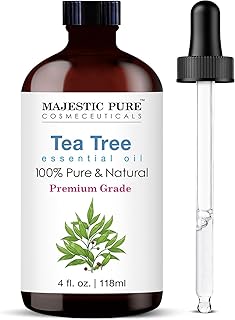


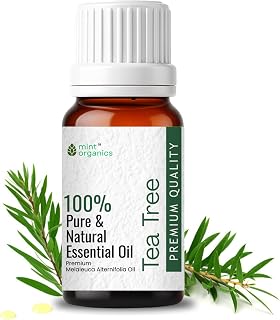


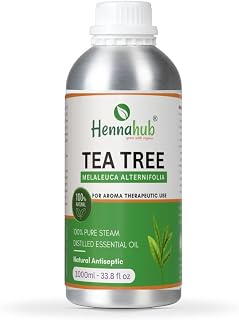


Choosing the right tea tree essential oil is not simply a matter of picking the bottle with the highest number of reviews. Product quality can vary because of differences in botanical source, extraction, concentration, packaging, ingredient disclosure, storage, and seller practices. For shoppers in India, it is also worth considering how the oil is packaged for the local climate, whether the ingredient list is clearly stated, and whether the product is intended for aromatherapy, cosmetic formulation, or another use.
This guide is designed to make comparison easier when researching tea tree essential oils in 2026. Instead of relying on a single specification, consider the complete product profile: botanical identity, ingredient purity, aroma, packaging, batch information, intended application, manufacturer transparency, customer feedback, and value for money.
Popular essential-oil brands and specialist aromatherapy companies such as NOW, Plant Therapy, Aura Cacia, Soulflower, and Moksha Lifestyle may appear during your research, but individual products should still be evaluated on their own specifications rather than selected solely because of brand recognition.
Tea tree essential oil is an aromatic essential oil obtained from the leaves and terminal branches of Melaleuca alternifolia, a plant native to Australia. It is commonly recognised by its fresh, herbal, camphoraceous aroma and is widely used in aromatherapy and cosmetic formulations.
The name can sometimes cause confusion because tea tree is unrelated to the Camellia sinensis plant used to produce drinking tea. When shopping, checking the botanical name on the label is therefore one of the simplest ways to distinguish genuine tea tree oil from similarly named products.
Tea tree oil is generally sold as a concentrated essential oil rather than as a ready-to-use skin product. This distinction matters because essential oils are highly concentrated aromatic materials and are normally used in appropriately diluted formulations for topical applications.
There is no single specification that automatically makes one bottle the best choice for every buyer. A good comparison should consider several factors together.
Quality is more complicated than the words “100% pure” printed on the front of a bottle. Marketing terminology should be considered alongside the actual product information.
The botanical name provides useful identification. For conventional tea tree essential oil, Melaleuca alternifolia is the key name to look for.
A label that provides both the common name and botanical name generally gives shoppers more useful information than one that only says “tea tree oil.” If a product is a blend, the label should make that clear rather than presenting it as a single essential oil.
A pure essential oil and a finished cosmetic product are not interchangeable. A facial serum, scalp oil, roll-on, cream, or cleansing formulation may contain tea tree oil alongside carrier oils and other ingredients.
For buyers specifically searching for tea tree essential oil, compare like with like. A 10 ml bottle of concentrated essential oil should not be directly compared with a 30 ml pre-diluted roll-on simply on the basis of bottle size.
Tea tree essential oil is commonly produced through steam distillation. During this process, aromatic compounds are separated from plant material and collected as essential oil.
Extraction method alone does not guarantee that one product will be superior to another. It is better viewed as one part of the product's overall technical profile.
Tea tree oil typically has a distinctive fresh, sharp, herbal and somewhat medicinal aroma. However, aroma perception is subjective, and scent can also vary with botanical material, processing, storage, age, and individual sensitivity.
A very strong smell is not automatically evidence of higher quality, just as a milder aroma is not automatically evidence of poor quality.
When comparing several products, create a simple specification checklist rather than relying on product titles alone.
The lowest sticker price is not necessarily the best value. Essential oils are commonly sold in different bottle sizes, and a larger bottle may have a lower cost per millilitre while requiring more careful storage and use.
Calculate the approximate price per millilitre when comparing different sizes. For example, a 10 ml bottle and a 30 ml bottle should not be judged solely by their total prices.
Also check whether two products contain the same type of oil. A concentrated tea tree essential oil, a diluted tea tree preparation, and a cosmetic blend can have very different pricing structures and should not be treated as equivalent products.
An unusually low price does not automatically mean a product is counterfeit or poor quality. However, it is a reason to examine the listing more carefully.
Choosing bottle size depends on how frequently you expect to use the oil. Smaller bottles can make sense for occasional aromatherapy or first-time buyers, while larger bottles may be more practical for regular users who already know they tolerate and prefer the product.
A smaller bottle can reduce the amount of oil exposed to repeated opening and closing over a long period. It is also a practical option for shoppers who want to test the aroma and dispensing system before purchasing a larger quantity.
Medium-size bottles can offer a balance between quantity and storage. They may be suitable for people who use essential oils periodically but do not want a very large supply.
Larger bottles can make economic sense for regular users, but they require good storage practices. Repeated exposure to air, heat and light can affect essential-oil quality over time, so buying more than you can reasonably use may reduce the practical value of the purchase.
Essential oils are aromatic and chemically complex materials that can be sensitive to environmental conditions. Packaging that reduces exposure to light is generally preferable to transparent packaging for long-term storage.
Amber glass is widely used for essential oils, although bottle colour alone should not be treated as proof of quality. A well-packaged bottle can still contain a product that does not suit your requirements, while a different packaging format may have other legitimate design considerations.
Indian shoppers should pay attention to storage because many regions experience substantial heat during the year. Essential oils should generally be stored according to the manufacturer's instructions, away from excessive heat and direct sunlight.
Do not leave an essential-oil bottle in a hot vehicle, on a sunny windowsill, or beside a heat-producing appliance. Keep the cap securely closed after use and avoid unnecessary exposure to air.
If you purchase several essential oils at once, a cool, dry and dark storage location can be more practical than keeping individual bottles scattered around a bathroom or kitchen.
Tea tree essential oil is commonly purchased for aromatherapy and for use as an ingredient in appropriately formulated cosmetic or personal-care products.
It is important to distinguish traditional or cosmetic use from medical treatment claims. Buying guides should not imply that tea tree oil can diagnose, cure, or replace professional treatment for a medical condition.
The fresh, herbal aroma of tea tree oil makes it a common choice for people interested in essential-oil aromatherapy. Diffusion should be performed according to the diffuser manufacturer's instructions, with appropriate ventilation and consideration for children, pets, pregnancy, respiratory sensitivities, and other household circumstances.
Tea tree essential oil may be incorporated into properly formulated personal-care products. DIY users should understand that essential oils are concentrated and should not be treated like ordinary carrier oils.
Tea tree is frequently included in shampoos, scalp products and hair-care formulations. However, an essential-oil bottle is not the same thing as a finished scalp product. A finished formulation has been designed around a specific concentration and application method.
One of the most important buying considerations is understanding that “natural” does not mean automatically safe at any concentration.
Undiluted tea tree essential oil can irritate skin, particularly in sensitive individuals. For topical use, follow the manufacturer's instructions and use an appropriate dilution method rather than applying concentrated oil casually to the skin.
If you are considering a topical product containing tea tree oil, a cautious approach is sensible. A small-area test can help identify obvious sensitivity before broader use, although no home test can guarantee that a product will never cause irritation or allergy.
Extra caution is appropriate when essential oils are used around young children or people with sensitivities. Product instructions should be followed carefully, and professional advice can be appropriate when there is uncertainty about suitability.
Essential-oil safety for animals differs from human use. Tea tree oil can be dangerous to pets, particularly when concentrated. Do not assume that a product safe for a human application is automatically appropriate for an animal.
A strong buying decision begins with understanding the ingredient statement.
If the product is marketed as tea tree essential oil, look for Melaleuca alternifolia in the product information when available.
Ingredients such as jojoba, coconut, almond, grapeseed or other carrier oils indicate that the product may be diluted or formulated rather than being a concentrated essential oil.
A product marketed as “tea tree fragrance oil” should not automatically be considered equivalent to tea tree essential oil. Fragrance oils and essential oils are different product categories.
This is an important distinction for shoppers. Essential oil is obtained from plant material through an extraction process, while fragrance oils are formulated aromatic products and may contain synthetic or other fragrance components.
If your objective is specifically to purchase tea tree essential oil, confirm that the product is actually described and labelled as an essential oil rather than selecting a similarly named fragrance product.
Carrier oils such as coconut, jojoba, sweet almond, and grapeseed oil are fixed vegetable oils used to dilute essential oils. They are not interchangeable with tea tree essential oil.
A product containing tea tree essential oil already diluted into a carrier can be useful for some applications, but it should be compared separately from a concentrated essential oil.
For an Amazon affiliate buying guide, the product page should be treated as a source of information to verify rather than as proof that every marketing statement is accurate.
Star ratings provide a quick overview, but they rarely explain why a product received its rating. Read the actual comments when making a purchase decision.
Brand reputation can be useful as an initial screening factor, but it should not replace product-level research.
For example, shoppers may encounter brands such as NOW, Plant Therapy, Aura Cacia, Soulflower, Moksha Lifestyle, and Organix Mantra while comparing essential oils. Each product should still be checked for its specific botanical identity, ingredients, bottle size, packaging, intended use, and current listing information.
A smaller specialist brand can sometimes offer useful technical information, while a larger established brand may have a broader product range. The important question is whether the specific bottle satisfies your requirements.
A high rating is helpful, but it does not tell you whether the product is suitable for your intended application. A buyer looking for aromatherapy may have different requirements from someone purchasing an ingredient for cosmetic formulation.
A tea tree shampoo, serum, roll-on, cream or scalp treatment cannot be compared directly with a bottle of concentrated essential oil.
More millilitres are not necessarily better. If you use essential oil infrequently, a smaller bottle may be a more sensible purchase.
Common names can be ambiguous. Checking the botanical identity provides a much stronger basis for comparison.
Improper storage can reduce the practical shelf life of aromatic products. Consider where you will store the oil before buying a large quantity.
Essential oils are concentrated botanical substances. Appropriate handling, dilution and storage are important.
The “best” option depends on what matters most to you. A buyer who wants occasional aromatherapy may prioritise a small, well-packaged bottle, while a frequent user may care more about cost per millilitre and bottle size.
Look for a smaller bottle from a transparent manufacturer with clear botanical and ingredient information. This reduces the risk of buying a large quantity before deciding whether you like the aroma and dispensing system.
Consider bottle size, dispenser design, packaging quality, storage requirements and cost per millilitre. A larger bottle may be reasonable if your usage pattern justifies it.
Prioritise technical information, ingredient clarity, botanical identification, batch traceability where available, and formulation guidance. Remember that essential oil concentration needs to be considered as part of the complete formulation.
Compare equivalent products by cost per millilitre rather than total bottle price. Do not sacrifice basic ingredient transparency simply to achieve the lowest possible purchase price.
Packaging, labelling, bottle quality and ease of use can matter more than buying the largest quantity. A neatly presented, clearly labelled product can be easier for a recipient to understand and use appropriately.
Good storage helps preserve the product after opening. Keep the bottle tightly closed and follow the manufacturer's storage recommendations.
Refrigeration is not automatically necessary for every essential oil. Follow the product manufacturer's specific storage guidance rather than applying a universal storage rule.
Essential oils can change over time, particularly when repeatedly exposed to oxygen, heat and light. Changes in aroma, appearance or packaging condition can be reasons to review whether a bottle is still suitable for your intended use.
Do not rely solely on smell to determine whether an essential oil is safe for a particular application. If the product is old, improperly stored, contaminated, leaking, or has unclear provenance, replacing it may be more appropriate than trying to determine its condition at home.
DIY recipes frequently make essential-oil use look simpler than it actually is. The final concentration matters, and different applications have different safety considerations.
When formulating a topical product, calculate the essential-oil concentration rather than adding drops casually. Drop size can vary depending on the bottle design, viscosity, temperature and dispensing method, so volume-based measurement can provide greater consistency for more precise formulations.
Do not use an essential-oil recipe simply because it is popular online. Consider the application, concentration, other ingredients, intended user, storage conditions and potential skin sensitivity.
Shoppers may encounter phrases such as “therapeutic grade,” “premium grade,” or similar marketing terminology. These phrases should not be treated as universal scientific grades that automatically establish purity or effectiveness.
Instead, examine the information that can actually be evaluated: botanical identity, ingredient disclosure, manufacturing information, testing or quality documentation when the manufacturer provides it, packaging, storage guidance and traceability.
Organic certification and essential-oil quality are related to different aspects of a product. An organic designation may concern agricultural production and certification standards, while other quality considerations involve botanical identity, processing, storage, purity and traceability.
If organic production is important to you, check the specific certification information rather than assuming that the word “organic” in marketing copy represents a particular certification.
Gas chromatography–mass spectrometry, commonly abbreviated as GC/MS, is an analytical technique used to examine the chemical composition of essential oils. Some essential-oil manufacturers publish or provide analytical information for particular batches.
For informed buyers, batch-specific analytical documentation can provide more useful information than vague claims about being “premium” or “high quality.” However, understanding a GC/MS report requires some technical knowledge, and the presence of a report alone does not mean the product is suitable for every intended use.
Batch or lot identification improves traceability. It can help connect a bottle to a particular production run and may make it easier to obtain product-specific information from the manufacturer.
When comparing several products, transparent batch information can therefore be considered a positive quality-control feature, especially for buyers who want more detailed documentation.
If you are comparing ten products, a simple scoring framework can prevent one attractive feature from dominating the decision.
When two products look nearly identical, move beyond headline marketing claims.
First compare the botanical identity and ingredient list. Next compare bottle size, packaging, batch information, manufacturer transparency and intended use. Then look at customer feedback for recurring practical problems. Finally, compare the current cost per millilitre.
If both products remain similar after this process, the more transparent listing may be the easier choice because it gives you more information to evaluate and verify.
A larger bottle is not necessarily a higher-quality product. Quantity answers the question “how much oil is included?” while quality involves identity, composition, processing, packaging, storage and traceability.
Do not allow a large bottle size to distract from unclear ingredient information. For essential oils, buying an appropriate quantity from a transparent source is generally more useful than simply maximising millilitres.
The best choice depends on your intended use, budget, preferred bottle size and quality criteria. Look for a clearly identified tea tree essential oil with transparent ingredients, suitable packaging and reliable product information rather than choosing solely by brand or star rating.
The terms are often used interchangeably in consumer products, but labels should still be checked carefully. “Tea tree oil” can refer to an essential oil or to a finished product containing tea tree oil, so the ingredient list and product description matter.
The conventional tea tree essential oil associated with Melaleuca alternifolia comes from the tea tree plant native to Australia. Checking the botanical name is useful when comparing products.
Concentrated essential oil can irritate skin and should not be assumed to be appropriate for undiluted topical application. Follow the manufacturer's directions and use an appropriate dilution or finished formulation for topical applications.
Tea tree essential oil should not be treated as an ordinary food ingredient. Ingestion can be hazardous, so do not consume it unless specifically directed by an appropriately qualified healthcare professional.
Tea tree oil is commonly included in hair and scalp products, but an essential-oil bottle is not equivalent to a finished hair-care treatment. If using a DIY formulation, concentration and scalp tolerance need to be considered carefully.
Tea tree oil is commonly marketed in skincare products aimed at blemish-prone skin, but consumers should avoid treating essential oil as a substitute for medical care. Concentrated oil can also irritate skin, so properly formulated products may be preferable to experimenting with undiluted oil.
Tea tree essential oil is commonly used in aromatherapy diffusers. Follow the diffuser manufacturer's instructions, maintain suitable ventilation, and consider the presence of children, pets and people who may be sensitive to fragrances.
Dark glass can help reduce light exposure, which is useful for many essential oils. However, bottle colour alone does not establish product quality. Ingredient transparency, botanical identity, manufacturing information and storage are also important.
Longevity depends on the product, packaging, storage conditions and how frequently the bottle is opened. Follow the manufacturer's shelf-life and storage instructions rather than assuming every bottle has the same lifespan.
Choose according to your expected usage. A smaller bottle can make sense for occasional users or first-time buyers, while a larger bottle may offer better value for regular users who can store it properly.
No. Price alone cannot establish quality. Compare botanical identity, ingredients, packaging, traceability, intended use, documentation and customer feedback before deciding whether a higher price is justified.
Avoid unclear ingredient lists, ambiguous product descriptions, misleading fragrance-oil terminology, unsupported medical claims, damaged packaging and products whose specifications cannot be verified or understood.
The strongest tea tree essential oil purchase is not necessarily the most expensive, most popular, or largest bottle. It is the product whose specifications match your intended use and whose manufacturer provides enough information for you to make a sensible comparison.
For shoppers in India, pay particular attention to botanical identity, ingredient transparency, bottle quality, storage requirements, current seller information and value per millilitre. When comparing products from brands such as NOW, Plant Therapy, Aura Cacia, Soulflower, Moksha Lifestyle or other established and specialist suppliers, evaluate the exact product rather than assuming every item from a recognised brand is identical in quality or suitability.
Before ordering, recheck the current product description, ingredients, bottle size, seller information, customer feedback and today's price. Online listings can change, so the information displayed at the time of purchase should take precedence over an older buying guide.
Most importantly, treat tea tree essential oil as a concentrated aromatic ingredient rather than an everyday substitute for medical treatment. Appropriate dilution, careful storage, responsible handling and realistic expectations are essential parts of making an informed purchase.