

♥ Wishlist
Compare 40 verified Hair Growth Products for Healthier-Looking Hair products in India. Reviews, ratings, pros, cons and buying advice updated for September 2026.


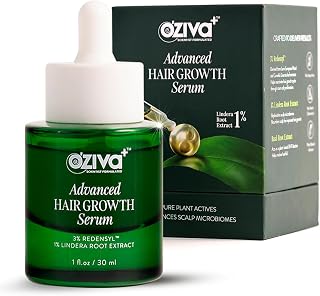
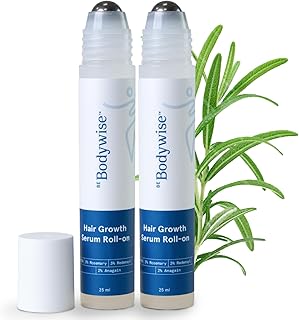

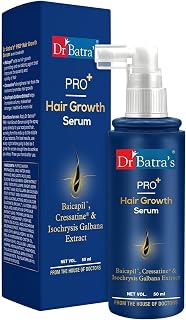


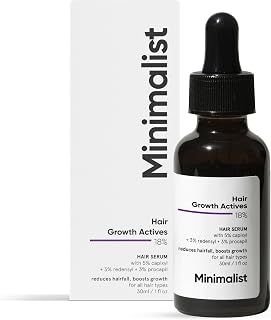


Choosing a hair growth product is not simply a matter of picking the bottle with the most impressive claims. Hair fall, thinning, breakage, a widening part, reduced density and a receding hairline can have very different causes, so the most suitable product depends on what you are actually trying to address. A useful buying decision starts with the ingredient profile, product format, intended use, scalp compatibility, evidence behind active ingredients, formulation quality and how realistically the product fits into your routine.
For shoppers in India, climate and lifestyle can also influence product selection. Heat, humidity, sweating, frequent hair washing, pollution exposure, hard water and regular use of styling products can affect how the scalp and hair feel. A product that works well for a dry scalp may not be the most comfortable choice for someone with an oily scalp, while a heavy oil may be unsuitable for someone who prefers a lightweight daily routine.
The expression “hair growth product” covers several different categories. Some products are designed to support the scalp environment, some aim to reduce dryness or breakage, some condition the hair shaft, and others contain active ingredients specifically marketed for hair-loss concerns. These should not be treated as interchangeable.
Ingredient lists are more useful than marketing language when comparing competing products. Instead of selecting a product solely because its packaging says “natural,” “herbal,” “advanced” or “growth formula,” examine the complete ingredient list and understand what each important component is intended to do.
Rosemary is widely used in hair oils, scalp serums and herbal hair-care formulations. Consumers commonly encounter rosemary oil or rosemary extracts in products marketed for scalp and hair growth support. Concentration, formulation, product quality and regular use matter when comparing products containing rosemary.
Caffeine appears in some scalp serums, shampoos and leave-on formulations marketed toward thinning hair. When comparing caffeine products, look beyond the presence of the ingredient itself and consider whether the product is a rinse-off cleanser or a leave-on treatment, because contact time and formulation can differ considerably.
Some modern hair serums use peptides and other cosmetic ingredients intended to support the appearance and feel of thicker, healthier hair. These products should be evaluated according to their stated cosmetic purpose rather than assuming that every peptide-based formula produces the same biological effect.
Biotin is a familiar ingredient in hair supplements and beauty products. However, the presence of biotin does not automatically mean that a product will correct hair loss. Biotin deficiency is relatively uncommon, and supplementation is not a universal solution for every form of thinning or shedding.
Amla, also known as Indian gooseberry, is a traditional ingredient used extensively in Indian hair-care products. It can be found in oils, powders, shampoos and herbal formulations. When buying an amla-based product, compare the complete formulation rather than assuming that all amla products have equivalent concentrations or performance.
Bhringraj has a long history of use in traditional Indian hair-care practices. Modern products may contain bhringraj extracts alongside oils, botanical ingredients and conditioning agents. The extraction method and overall formulation can differ substantially between products.
Onion-based hair products have become popular in India, particularly in oils, shampoos and scalp serums. Some formulas combine onion extract with other botanical ingredients. Consumers should check whether the product contains an actual extract or oil and review the complete ingredient list rather than judging the formula solely by its headline ingredient.
For shoppers specifically interested in natural or herbal hair care, “herbal” should be treated as a category description rather than a guarantee of effectiveness or safety. Botanical ingredients can still cause irritation or sensitivity, and natural products can vary in concentration, extraction method, purity and formulation quality.
A stronger buying approach is to look for transparent ingredient disclosure, clear directions, appropriate packaging, manufacturer information, batch or product identification where applicable, and realistic claims. Products that explain how and when they should be used are generally easier to evaluate than formulas built primarily around vague promises.
These ingredients are not equivalent. Some are primarily used for conditioning, some for scalp-focused formulations, and others for traditional hair-care purposes. A long ingredient list is not necessarily better than a short, well-formulated one.
One of the most important purchasing decisions is choosing the right product format. Hair oils, serums, shampoos and oral supplements serve different purposes and should not be compared as though they were identical products.
Hair oils are commonly used before shampooing or as part of scalp and hair conditioning routines. Coconut oil, almond oil, sesame oil, castor oil, amla oil and blends containing botanical extracts are widely available in India.
Oil can help reduce friction and improve the feel and manageability of hair, but an oil should not automatically be interpreted as a clinically established treatment for every type of hair loss. People with oily or acne-prone scalps may also prefer lighter application or avoid leaving heavy oil on the scalp for extended periods.
Scalp serums are generally designed to be lightweight and are often intended for leave-on use. They may contain ingredients such as caffeine, peptides, botanical extracts or other cosmetic actives. A serum can be convenient for consumers who do not want the greasy feel associated with traditional hair oils.
Shampoos primarily cleanse the scalp and hair. Because they are rinsed away, they should not automatically be evaluated in the same way as leave-on scalp treatments. A shampoo can be useful as part of an overall scalp-care routine, particularly when cleansing and hair manageability are priorities.
Supplements are different from topical hair products because they are consumed rather than applied to the scalp. They should not be selected solely on the number of vitamins, minerals or herbal ingredients listed on the label. Excessive intake of certain nutrients can be unnecessary or potentially problematic, so consumers should avoid assuming that higher doses are automatically better.
A ranked list can be useful, but the order should not be the only factor in a purchasing decision. A product that suits one person may be inconvenient or unsuitable for another. Compare the following characteristics before choosing from any top-10 shortlist.
If the primary problem is dryness, rough texture or breakage, a conditioning-focused product may be more appropriate than choosing a formula solely because it is marketed for hair growth. Oils and conditioners containing ingredients such as coconut oil, argan oil or other emollients may improve manageability and reduce the dry feel of the hair.
Consumers with an oily scalp may prefer lightweight serums and non-heavy cleansing routines. Applying large quantities of oil may make the hair look greasy and can be inconvenient when frequent washing is necessary.
Look for a gentle routine that avoids excessive cleansing and harsh-feeling products. Moisturising or conditioning ingredients may improve comfort, but persistent scaling, redness, pain or inflammation warrants professional evaluation rather than simply adding more cosmetic products.
Hair that snaps along the length can create the appearance of increased hair loss even when the underlying issue is breakage. Heat styling, chemical treatments, aggressive brushing and tight hairstyles can all contribute. In this situation, strengthening and conditioning the hair shaft and reducing mechanical damage may be more useful than continuously changing scalp-growth products.
Visible thinning deserves more careful consideration. A widening part, reduced density around the crown or progressive recession may have different causes from temporary shedding. Cosmetic products can form part of a hair-care routine, but persistent or progressive thinning may require professional assessment.
Packaging often presents a few headline ingredients prominently, while the full ingredient list provides a more complete picture of the formula. Before purchasing, check the ingredient declaration, directions for use, warnings and storage instructions.
Natural does not automatically mean more effective, gentler or appropriate for every scalp. Botanical ingredients can be useful, but they still need to be evaluated as part of the complete formula.
Hair grows slowly, and changes in hair density cannot generally be judged after only a few applications. Switching between products every few days also makes it difficult to determine whether a routine is suitable.
Hair that breaks less may appear fuller and healthier even though the number of follicles has not changed. This is a meaningful cosmetic benefit, but it is different from stimulating new hair growth.
A high average rating can be useful, but reviews should be interpreted in context. Look for detailed comments about scalp type, texture, application experience and long-term use rather than relying exclusively on the star rating.
A scalp serum cannot compensate for excessive heat styling, repeated chemical processing, aggressive brushing or chronically tight hairstyles. Product selection works best when combined with sensible hair-care habits.
Layering several new oils, serums, shampoos and supplements simultaneously can make it difficult to identify which product is causing irritation or whether any change is associated with a particular product. Introducing products methodically can make your routine easier to evaluate.
Consistency is one of the most practical considerations when selecting a hair product. A theoretically attractive formula is of limited practical value if its application method is inconvenient.
People with sensitive skin should be particularly careful with concentrated botanical oils, essential oils, fragrances and new active ingredients. A small-area test can help identify obvious sensitivity before applying a new product more extensively, although it cannot guarantee that a product will never cause a reaction.
Do not apply cosmetic products to significantly irritated, broken or infected skin unless a healthcare professional has advised you to do so. If burning, swelling, severe itching, rash or other concerning symptoms occur, discontinue the product and seek appropriate medical advice.
A buying guide should not treat every form of hair loss as a cosmetic problem. Consider seeking professional advice when shedding is persistent, rapidly worsening or accompanied by other changes.
A dermatologist or other qualified healthcare professional can help distinguish between different causes of hair loss. This is particularly important because nutritional deficiencies, hormonal factors, medication effects, inflammatory scalp conditions, hereditary hair loss and temporary shedding can require very different approaches.
Many hair-care products are marketed specifically toward men or women, but the suitability of a formula should be judged primarily by its ingredients, intended use and individual needs rather than packaging alone. Hair-loss patterns and underlying causes can differ between individuals, so a gender-specific label does not automatically make one formula superior.
Men comparing products may be particularly interested in formulas marketed around receding temples, crown thinning or general scalp support. Women may look for products addressing increased shedding, visible scalp around the part or hair breakage. In either case, persistent thinning should not be treated solely as a cosmetic issue.
Oil-based hair care remains particularly popular in India because it fits easily into traditional pre-shampoo routines. However, different oils have different textures and characteristics.
The actual formulation matters because a product called “amla oil” or “rosemary oil” can contain a blend of several ingredients rather than being a single pure oil.
Well-known brands can make product discovery easier, but brand recognition alone should not determine the purchase. Depending on the category, Indian shoppers may encounter brands such as Mamaearth, WOW Skin Science, Minimalist, Pilgrim, Indulekha, Biotique, Khadi Natural, The Moms Co., WishCare, Man Matters and Beardo.
These brands offer different types of hair and scalp products, and individual products within the same brand can have very different ingredient profiles. Always compare the specific product rather than assuming that every product from a familiar brand has the same purpose or formulation.
The cheapest bottle is not necessarily the best value, and a larger package is not automatically more economical. Compare the quantity, recommended usage and product format together.
A strong candidate should have a clearly defined purpose, transparent product information, sensible directions and an ingredient profile that matches your particular hair or scalp concern. It should also be practical enough to use consistently.
For an independent comparison, consider scoring each product across several areas: ingredient transparency, intended purpose, application convenience, scalp compatibility, formulation, packaging, customer feedback, quantity and overall value. This produces a more useful assessment than ranking products on popularity alone.
There is no single product that is best for everyone. The appropriate choice depends on whether the priority is scalp care, hair conditioning, breakage reduction, general hair-care support or persistent thinning. Compare ingredients, product format, scalp compatibility, directions and current customer feedback before deciding.
Hair oils can support conditioning and scalp-care routines, and some contain ingredients commonly researched or marketed for hair-growth support. However, an oil should not automatically be considered a proven treatment for every cause of hair loss. Persistent thinning requires a more targeted assessment.
Rosemary is widely used in hair-care products and is of interest for scalp and hair-growth applications. The formulation, concentration, application method and consistency of use matter. Pure essential oils should not be treated as automatically suitable for direct application to the scalp.
Onion-based products are popular in India and may be used as part of a cosmetic hair-care routine. Product formulations vary considerably, so check the ingredient list and intended use rather than assuming that every onion oil has the same properties.
Herbal products can be suitable for many consumers, but “herbal” does not guarantee that a product will be irritation-free. Botanical extracts and essential oils can cause sensitivity in some people. Read the ingredient list, follow the directions and discontinue use if a significant reaction develops.
Choose according to your routine and hair type. A serum is generally more convenient for consumers who prefer a lightweight leave-on product, while an oil may be preferable for traditional pre-shampoo conditioning. They are not necessarily substitutes for one another.
Shampoo primarily cleanses the scalp and hair, so it should not be expected to address every underlying cause of hair loss. A suitable shampoo can be an important part of scalp hygiene, but persistent or significant shedding may require a broader approach.
Follow the manufacturer's directions and evaluate the routine consistently rather than changing products repeatedly. Hair-related changes can take time to become noticeable, and the appropriate evaluation period depends on the product and the underlying concern.
You can build a multi-step hair-care routine, but adding several new products at the same time can make irritation and product effectiveness difficult to assess. It is usually more practical to introduce products gradually and understand how each one fits into the routine.
No. Supplements and topical products work through different routes and address different aspects of hair care. Supplements should not be taken simply because a product is marketed for hair growth, particularly at high doses or when there is no identified nutritional need.
Not necessarily. Price can reflect formulation, packaging, branding or other factors and does not by itself establish effectiveness. Compare the ingredients, quantity, intended use, directions and evidence relevant to the product's claims.
This buying guide is designed to help Indian consumers compare hair growth and hair-care products using practical criteria rather than relying on marketing language alone. Product information, formulations, prices, availability, ratings and customer feedback can change during the year, so shoppers should verify the latest information before making a purchase.
When comparing products for August 2026, focus on the specific formula, current specifications, intended use and your own hair-care requirements. A well-matched product used consistently is generally a more sensible choice than selecting a popular product simply because it appears frequently in rankings.
Hair growth products are not interchangeable with medical diagnosis or treatment. Cosmetic and herbal products may support scalp care, conditioning and the appearance of healthier hair, but they cannot be assumed to treat every form of hair loss. If you are experiencing sudden, severe, patchy or persistent hair loss, consider consulting a qualified dermatologist or healthcare professional to identify the underlying cause.