
♥ Wishlist
Compare 48 verified Ashwagandha products in India. Reviews, ratings, pros, cons and buying advice updated for September 2026.


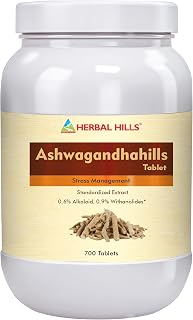


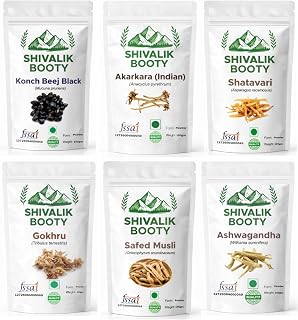


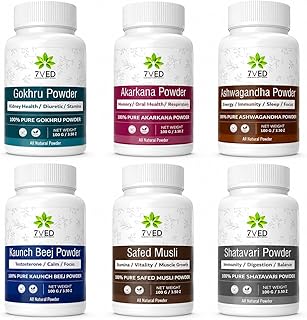
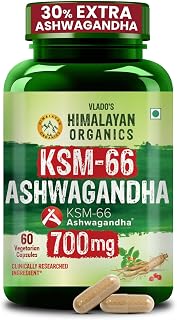


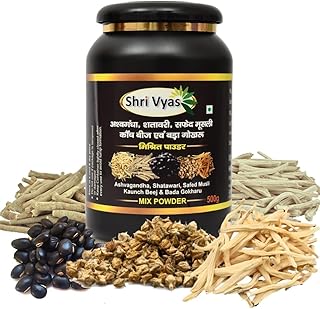

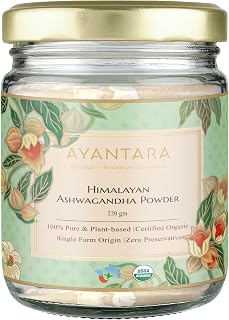


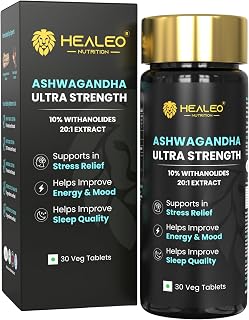
Ashwagandha has become one of the most widely discussed traditional herbal ingredients in India, with products now available as powders, capsules, tablets, extracts and blended herbal formulas. However, these products are not interchangeable. The source of the ashwagandha, the plant part used, extraction method, standardisation, serving size, additional ingredients, packaging and quality information can all affect how a product should be evaluated.
This buying guide is designed to help Indian shoppers compare ashwagandha products more carefully rather than choosing solely on popularity, ratings or price. The goal is to understand what is actually inside the product, how clearly the manufacturer communicates its formulation and whether the product format fits the buyer's intended use.
Brands commonly encountered while comparing ashwagandha products in India include Himalaya, Organic India, Dabur, Kapiva and other established herbal and nutrition brands. Their products can differ substantially in formulation, dosage, extract specifications and supporting ingredients, so the brand name alone should not determine the final choice.
A useful comparison should go beyond customer ratings. A product can have thousands of reviews while still being unsuitable for a particular buyer because its formulation, dosage or ingredient transparency does not match their requirements.
When comparing ashwagandha supplements, consider the following factors together:
One of the most important distinctions when comparing products is whether they contain traditional root powder or an extracted form of ashwagandha.
Root powder is the more traditional and straightforward format. The dried plant material is processed into a powder without concentrating it through the same type of extraction process used for many standardised supplements.
Powder can appeal to buyers who prefer a simple ingredient list and want to incorporate the product into a beverage or other food. The disadvantage is that measuring a consistent serving can be less convenient than taking a pre-measured capsule or tablet.
An extract is produced by processing plant material to concentrate selected constituents. Extract products therefore require closer label examination because two products labelled as ashwagandha extract may not necessarily have identical extraction characteristics.
Look for information about the plant part, extract quantity and any stated standardisation. A transparent label is generally more useful than a product that simply advertises a large-sounding extract number without explaining the formulation.
There is no single format that is automatically best for every buyer. Capsules and tablets are convenient and easy to measure, while powder may suit shoppers who prefer a flexible traditional format. Extract-based products may appeal to people specifically looking for a concentrated formulation.
The better choice depends on the label, formulation, serving instructions, personal preferences and intended use rather than the word “extract” or “powder” by itself.
Ashwagandha products can be formulated using different parts of the plant, so buyers should read the ingredient panel instead of assuming that every product contains the same material.
For traditional ashwagandha supplementation, root-based products are particularly common. Some formulas may combine root with other plant materials or use a proprietary formulation. If a product does not clearly explain what plant material is used, it becomes more difficult to compare it with another product on an equivalent basis.
When comparing two products, record the exact wording used on each label. “Ashwagandha,” “ashwagandha root powder” and “ashwagandha root extract” describe formulations that should not automatically be treated as identical.
Withanolides are naturally occurring constituents associated with Withania somnifera, the botanical commonly known as ashwagandha. Many concentrated ashwagandha extracts discuss withanolide content or standardisation on the product label.
This information can make comparisons easier, but it needs to be interpreted in context. A higher stated percentage does not automatically mean that one product is universally better than another. Extraction method, total extract quantity, serving size and the specific formulation also matter.
A particularly useful comparison is to examine both the amount of extract per serving and the stated standardisation. Looking at only the percentage can give an incomplete picture.
Format is an important practical consideration, particularly for people who want a supplement that fits easily into an established daily routine.
Capsules are convenient because the serving is generally pre-measured and there is no need to mix a powder. They can be useful for shoppers who prioritise portability and straightforward use.
Tablets can also provide a measured serving and are widely available in Indian supplement and herbal categories. Compare the complete ingredient panel because tablets may contain additional excipients required for manufacturing.
Powder provides flexibility and is often selected by people who prefer traditional herbal preparations. However, the buyer should pay attention to the supplied measuring instructions and storage requirements.
The front of a supplement package is primarily designed to communicate product positioning. The ingredient panel is usually more useful for serious comparison.
Start by identifying the exact ashwagandha ingredient. Then determine the quantity per serving, the recommended serving size and whether other herbal ingredients have been added.
If a product uses a proprietary blend, the label may make it harder to determine the exact amount of each component. For buyers comparing products specifically for ashwagandha content, transparent quantities are generally easier to evaluate.
A single-ingredient product is usually easier to evaluate because the formulation is straightforward. If your goal is specifically to compare ashwagandha products, a simple formula makes it easier to understand exactly what you are purchasing.
Multi-ingredient products can be useful for shoppers who specifically want a broader herbal formulation. However, additional ingredients make direct comparisons more complicated because differences in serving size and ingredient quantities can affect the overall formulation.
Do not assume that a longer ingredient list represents better value. The relevant question is whether the additional ingredients serve a clear purpose for your purchasing objective.
Look for a product with a short, clearly disclosed ingredient list and straightforward serving instructions. A simple root powder or clearly specified extract can make product comparison easier.
Capsules and tablets are generally easier to carry and use without preparation. Compare the number of servings in the package rather than the number of capsules alone.
Focus on the extract quantity, standardisation information and serving instructions. Avoid judging strength solely from large numbers displayed prominently on the front of the package.
Buyers interested in a traditional format may prefer a clearly labelled root powder. The product should still provide appropriate ingredient, storage and usage information.
The lowest package price is not necessarily the lowest cost per serving. Likewise, a larger bottle is not automatically better value.
To compare value, calculate the number of usable servings in each package and then compare the price per serving. For extract products, you can also examine how much extract is supplied per serving.
For example, a larger container may have a lower headline price but require a larger daily serving. Another product may cost more per bottle but contain more servings. Comparing the complete serving information provides a more meaningful assessment.
Ratings can be useful as one part of the buying decision, but they do not explain whether the formulation is suitable for a particular buyer. Reviews can also focus on packaging, taste, delivery or personal expectations rather than product specifications.
A bottle containing more capsules is not necessarily a better deal. Check how many capsules constitute one serving.
Milligram amounts need context. Powder and extracts cannot be compared simply by looking at the number of milligrams printed on the package.
Some buyers focus entirely on the main ingredient and overlook sweeteners, flavours, fillers, colours or other botanicals. Read the complete ingredient list before buying.
Herbal powders and supplements should be stored according to the manufacturer's instructions. Moisture, heat and inappropriate storage can affect product condition.
Popularity is not a substitute for formulation transparency. An independently researched purchase should begin with the label and product information rather than promotional claims.
Customer feedback can provide useful information when it is interpreted critically. Look for repeated observations rather than relying on a single highly positive or negative review.
Useful review topics include packaging condition, seal integrity, powder consistency, capsule or tablet appearance, ease of use and whether the product description matches the physical product received.
Be more cautious about reviews making strong health claims that cannot be independently verified. Individual experiences are not proof that the same outcome will occur for another person.
Ashwagandha has a long history in traditional Indian herbal practices. Modern commercial supplements, however, can vary considerably from traditional preparations because they may use concentrated extracts, capsules, tablets or combinations of several ingredients.
This distinction is important when comparing products. A modern supplement should be evaluated according to its actual formulation rather than assuming that every commercially packaged product is equivalent to a traditional preparation.
Quality assessment begins with transparency. Buyers should be able to identify the manufacturer or marketer, understand the product's ingredients and find clear instructions for use and storage.
Where manufacturers provide additional information about testing, raw material sourcing or quality-control processes, shoppers can use that information as part of their comparison. Such claims should be considered only when they are clearly documented by the manufacturer and applicable to the specific product.
Do not assume that a product is superior merely because its packaging uses terms such as “premium,” “pure,” “advanced,” “natural” or “high strength.” These descriptions need to be considered alongside measurable product information.
Packaging is particularly relevant for powdered herbal products. A container should be appropriate for the product and provide practical protection during normal storage.
Check whether the packaging includes a proper seal and whether the product has clear storage instructions. Once opened, follow the manufacturer's directions regarding temperature, moisture and exposure to light.
For online purchases, inspect the package when it arrives. Check the seal, label, product identity, batch information and expiry or best-before information before using the product.
Ashwagandha is a supplement ingredient, not a replacement for professional medical advice. Natural or herbal does not automatically mean risk-free for every individual.
People who are pregnant or breastfeeding, have an existing medical condition, are preparing for surgery, or take prescription or other regular medicines should consider speaking with a qualified healthcare professional before using an ashwagandha supplement.
Anyone who develops an unexpected or concerning reaction after using a supplement should stop and seek appropriate professional advice. Product labels should always be read before use, including warnings and recommended serving information.
Do not use an online product review as a substitute for personalised medical guidance.
Ashwagandha products are frequently marketed toward different lifestyle goals, including stress management, sleep, exercise and general wellbeing. However, marketing language should not be treated as a guarantee of an individual outcome.
If you are comparing products for a particular purpose, start by examining the formulation and serving instructions rather than choosing the product with the strongest promotional claim.
For example, someone looking for a simple herbal supplement may prefer a single-ingredient formulation, while another buyer may deliberately choose a broader formula. These are different purchasing criteria and should be compared separately.
Established names such as Himalaya, Organic India, Dabur and Kapiva may appear frequently in Indian searches for herbal supplements. Their familiarity can make them useful starting points for comparison, but brand recognition should not replace product-level evaluation.
When comparing products from different brands, place the labels side by side and examine the exact formulation. A reputable brand can offer multiple ashwagandha products with different formats and ingredient combinations, so the product specification matters more than the company name alone.
There is no single product that is best for every buyer. The right choice depends on the desired format, ingredient transparency, extract or powder formulation, serving size, quality information, budget and individual requirements. Compare the actual label rather than choosing solely by brand popularity or customer rating.
Neither format is automatically better. Powder may appeal to buyers who prefer a traditional form, while capsules provide convenience and a pre-measured serving. Compare the formulation and serving information before making a decision.
Check the ingredient list, plant part, product form, serving size, extract information, standardisation where applicable, additional ingredients, manufacturer or marketer information, storage instructions and warnings. Also compare the actual product specification with the online listing.
No. A larger milligram number alone does not establish that a product is better. Powder and concentrated extracts have different characteristics, so the complete formulation and serving information need to be considered.
Withanolides are naturally occurring constituents found in Withania somnifera. Some ashwagandha extracts provide information about their withanolide standardisation, which can help shoppers compare certain extract formulations more consistently.
A single-ingredient product can be easier to evaluate because you can focus directly on the ashwagandha formulation. A multi-herb product may suit buyers who specifically want several ingredients together. The better choice depends on your purchasing objective.
Compare the cost per serving rather than the package price alone. Then consider the amount and type of ashwagandha supplied per serving, formulation transparency and any additional ingredients.
No supplement should be assumed to be suitable for everyone. Certain people may need professional advice before using ashwagandha, particularly those who are pregnant or breastfeeding, have medical conditions, take medicines or have other relevant health considerations.
Follow the storage and expiry or best-before information provided on the specific product. Keep the container closed and store it under the manufacturer's recommended conditions.
Reviews are useful as one source of practical feedback, but they should not be the only deciding factor. Use them alongside the ingredient panel, serving information, manufacturer details and other product specifications.
The best way to compare ashwagandha products in India is to move beyond marketing claims and examine the actual formulation. Start with the plant part and product format, then check the quantity per serving, extract details, standardisation information, additional ingredients and manufacturer information.
For shoppers comparing products from brands such as Himalaya, Organic India, Dabur, Kapiva and other established manufacturers, the most useful approach is to compare equivalent specifications side by side. A familiar brand name can be a useful starting point, but the exact product should always be evaluated independently.
Also consider practical factors such as capsule versus powder format, serving convenience, cost per serving, storage requirements and the clarity of the product label. Avoid choosing a supplement simply because it has the highest rating, the largest capsule count or the strongest marketing language.
Most importantly, treat ashwagandha as a supplement rather than a guaranteed solution for a health problem. Read the label carefully, follow the manufacturer's directions and seek qualified healthcare advice when your personal circumstances or medications make that appropriate.