

♥ Wishlist
Compare 55 verified Kidney Stones: Herbal Care Products & Wellness Support products in India. Reviews, ratings, pros, cons and buying advice updated for September 2026.


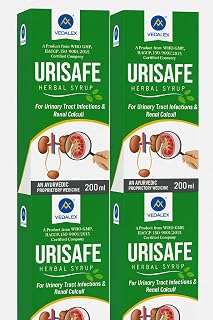


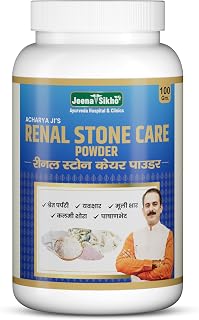


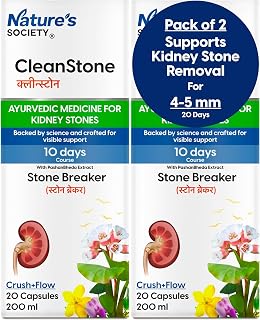


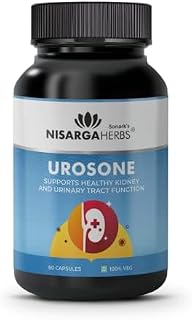


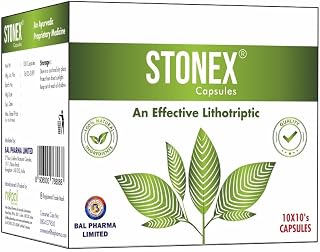


When comparing kidney stone products in India, the most important question is not simply which supplement has the longest ingredient list or the highest number of ratings. Kidney stones have different compositions and causes, so a product that may be appropriate as a general wellness supplement is not automatically suitable for someone with a confirmed calcium oxalate, calcium phosphate, uric acid, struvite, or cystine stone.
Reliable kidney stone management starts with understanding the type of stone, hydration status, dietary factors, medical history, and whether a stone is currently obstructing the urinary tract. Medical guidance from the National Institute of Diabetes and Digestive and Kidney Diseases (NIDDK) emphasizes that treatment depends on factors such as stone size, location, and composition, while prevention commonly involves adequate fluid intake and individualized dietary changes. :contentReference[oaicite:0]{index=0}
This makes an independent buying guide particularly useful: instead of treating every herbal tablet, capsule, powder, syrup, or urinary-health formula as interchangeable, compare the formulation, ingredient transparency, intended use, dosage instructions, manufacturer information, safety warnings, and evidence behind the claims.
The phrase “kidney stone products” can describe several different categories available to Indian consumers. These include herbal supplements, traditional botanical formulations, citrate-based nutritional products, urinary-health supplements, hydration-support products, and products marketed for kidney or urinary tract wellness.
These categories should not be confused with prescription medicines or procedures used to actively treat a significant obstruction. A product sold as a dietary or herbal supplement should not automatically be assumed to dissolve an existing stone, remove an obstruction, prevent infection, or replace assessment by a qualified healthcare professional.
Kidney stones are not a single disease with one universal dietary or supplement solution. Different stones can involve different metabolic and dietary factors. NIDDK identifies calcium oxalate, calcium phosphate, uric acid, and cystine stones among the major types, with prevention strategies varying according to the type involved. :contentReference[oaicite:1]{index=1}
Calcium oxalate is a common stone composition. For people who form these stones, sodium intake, dietary oxalate, calcium intake, animal protein, and fluid intake can all be relevant. Importantly, avoiding calcium altogether is not necessarily the correct approach. Adequate dietary calcium can help bind oxalate in the digestive tract, which is one reason individualized dietary advice is preferable to blanket restrictions. :contentReference[oaicite:2]{index=2}
Calcium phosphate stones require their own evaluation. Sodium reduction, appropriate calcium intake, and other dietary or metabolic considerations may be relevant, but the best strategy depends on the individual's laboratory findings and stone history.
Uric acid stones are associated with urinary chemistry and dietary factors that differ from calcium stones. Animal protein intake can be relevant, and weight management may also form part of prevention advice. A supplement marketed broadly for “kidney cleansing” should not be treated as a substitute for addressing the underlying risk factors.
Struvite stones are associated with certain urinary infections. This is a particularly important reason to avoid relying on a general herbal kidney supplement when an infection or obstruction is suspected. Medical treatment may be necessary.
Cystine stones are associated with an inherited condition and may require a more specialized prevention strategy. High fluid intake is particularly important, but people with recurrent cystine stones should receive individualized medical guidance.
A strong product should be judged by more than its packaging. The following criteria can help narrow down options when comparing products sold in India.
Look for a complete ingredient list rather than vague descriptions such as “proprietary kidney blend.” A transparent label should identify the botanical or nutritional ingredients and, where relevant, the amount per serving.
The label should explain how the product is intended to be taken. Avoid assuming that taking more capsules or servings will provide better results.
Check whether the packaging clearly identifies the manufacturer or responsible company, batch information, expiry date, and other required product details appropriate to its category.
Be cautious when a supplement is marketed as though it can universally “flush,” “melt,” “break,” or “dissolve” every kidney stone. Kidney stone composition and obstruction status matter, and treatment decisions cannot reliably be made from a generic product claim.
A responsible product should provide appropriate warnings, usage restrictions, and information about who should seek professional advice before taking it.
For herbal products, look for clear botanical names where available, standardized information when claimed, and traceable manufacturer details. A long ingredient list is not inherently better than a short one.
Customer reviews can help identify practical issues such as packaging, tablet size, taste, or consistency. However, reviews should not be treated as clinical evidence that a supplement dissolves kidney stones or prevents recurrence.
Citrate is one of the more important concepts in kidney stone prevention. Citrus beverages can provide citrate, and NIDDK notes that citrate can help prevent crystals from turning into stones. However, that does not mean every lemon-flavoured drink or citrate-containing supplement is equivalent to medically prescribed potassium citrate. :contentReference[oaicite:3]{index=3}
When evaluating a product, determine exactly which form of citrate it contains, how much is provided, and what the product is actually intended to do.
Some kidney stone products contain potassium salts. Potassium-containing products should not be evaluated solely on the assumption that “more potassium is healthier.” People with kidney problems or those taking certain medicines may require professional advice before using potassium-containing supplements.
Herbal ingredients can have biological effects and may interact with medicines. The evidence also varies considerably between different botanicals and formulations. The National Center for Complementary and Integrative Health notes that evidence for dietary supplements varies widely and that supplements can differ from products studied in research. :contentReference[oaicite:4]{index=4}
Do not assume that adding multiple vitamins or minerals makes a kidney product more effective. The suitability of an ingredient depends on the dose, the individual's diet, kidney function, medications, and stone type.
Herbal supplements are popular in India because many consumers prefer traditional or plant-based approaches. That preference is reasonable as a personal choice, but “natural” does not automatically mean risk-free or clinically proven.
NCCIH specifically advises consumers to consider potential medication interactions and health conditions when using dietary or herbal supplements. It also notes that manufacturers do not necessarily have to establish the same level of safety and effectiveness before a dietary supplement reaches consumers as would be expected for conventional medicines. :contentReference[oaicite:5]{index=5}
For that reason, a useful buying guide should distinguish between:
Indian kidney-health supplements may use ingredients such as Punarnava, Gokshura, Varuna, Pashanbheda, coriander, barley-derived ingredients, or other botanicals. Their presence in a traditional formulation does not by itself establish that the finished product will dissolve an existing kidney stone or prevent recurrence.
When comparing such formulations, focus on the exact extract, quantity, formulation, manufacturer, intended use, safety information, and available evidence rather than simply counting the number of herbs.
Punarnava is widely used in traditional Indian herbal formulations. Buyers should nevertheless distinguish traditional use from evidence demonstrating that a particular commercial formulation treats a confirmed kidney stone.
Gokshura is another botanical commonly associated with urinary wellness in traditional formulations. Its inclusion can be relevant when comparing products, but consumers should avoid interpreting traditional urinary-health positioning as proof of stone dissolution.
Varuna appears in some traditional urinary and stone-related formulations. Compare the botanical identity, formulation details, dose, and manufacturer information instead of selecting a product solely because the ingredient appears on the front label.
Pashanbheda is traditionally associated with stone-related herbal preparations. Because common names can refer to different botanical materials, a buyer should pay attention to the exact botanical identification used on the product label.
It is easy for shoppers to overlook the simplest intervention while searching for supplements. Adequate fluid intake is central to kidney stone prevention because it dilutes urine and helps reduce the concentration of minerals that can contribute to stone formation. NIDDK identifies drinking enough liquid, mainly water, as the most important dietary or lifestyle measure for preventing many kidney stones. :contentReference[oaicite:6]{index=6}
Fluid requirements are not identical for everyone. Weather, physical activity, sweating, existing medical conditions, and kidney function can affect appropriate intake. Someone exercising outdoors in hot Indian weather may lose substantially more fluid through sweating than someone working indoors in a cooler environment.
People with kidney failure or another condition requiring fluid restriction should not independently increase fluid intake simply because a supplement label recommends doing so.
Climate is an important practical consideration for Indian consumers. Heat, humidity, outdoor work, exercise, travel, and prolonged exposure to high temperatures can increase fluid loss. Someone who routinely becomes dehydrated may need to pay particular attention to regular fluid consumption.
Instead of waiting until severe thirst develops, many people find it easier to build hydration into their daily routine. Carrying a reusable water bottle, drinking regularly during working hours, and increasing fluid intake appropriately during periods of heavy sweating can be more sustainable than relying on a supplement marketed as a kidney cleanser.
A kidney stone supplement should never be evaluated in isolation from diet. NIDDK explains that prevention may involve changes to sodium, animal protein, calcium, and oxalate intake depending on the type of stone. :contentReference[oaicite:7]{index=7}
High sodium intake can increase the likelihood of calcium-containing stones. For Indian diets, sodium can come from table salt as well as packaged snacks, pickles, instant foods, sauces, processed foods, restaurant meals, and salty spice or seasoning mixes.
Reading labels can therefore be more useful than simply avoiding the salt shaker. Hidden sodium can appear in ingredients such as sodium bicarbonate, monosodium glutamate, and other sodium-containing additives. :contentReference[oaicite:8]{index=8}
One of the most common misunderstandings is that calcium-containing foods should always be avoided after a calcium stone. Appropriate dietary calcium can actually help bind oxalate in the digestive tract. The right amount should be individualized rather than replaced with unnecessary restriction. :contentReference[oaicite:9]{index=9}
For calcium oxalate stone formers, foods such as spinach, nuts, peanuts, rhubarb, and wheat bran can be relevant sources of oxalate. However, the appropriate degree of restriction should depend on the individual's overall dietary pattern and professional advice rather than eliminating every food that contains oxalate. :contentReference[oaicite:10]{index=10}
Animal protein can influence kidney stone risk, particularly for certain stone types. A balanced diet can often incorporate plant-based protein sources while maintaining adequate overall nutrition.
If you are comparing several products for an India-focused buying guide, use the same checklist for every candidate. This makes the comparison more useful than ranking products solely by popularity.
Tablets are convenient and usually straightforward to store. They can be useful for consumers who prefer a fixed serving format, although tablet size and the number of tablets required per serving should be checked.
Capsules can be convenient for herbal combinations and are often easier for consumers who dislike powders or liquids. Compare capsule count with the recommended serving rather than comparing bottle size alone.
Powders may allow flexible serving sizes but can have stronger tastes and require accurate preparation. Storage and moisture protection are also worth considering.
Liquid products may appeal to people who have difficulty swallowing tablets. However, check serving measurements, storage instructions, added sugars where relevant, and the total amount consumed per day.
The front of the package is primarily designed to communicate marketing information. The back or side label is usually more useful for serious comparison.
Look for the full ingredient panel, serving size, recommended use, warnings, storage instructions, manufacturer details, batch information, expiry date, and any applicable regulatory or quality information.
Be particularly careful with phrases such as “100% natural,” “clinically proven,” “detox,” “guaranteed,” “instant relief,” or “dissolves all stones.” Such phrases should prompt you to investigate what evidence actually supports the claim.
Some people assume that a herbal product can replace a prescription medicine because both are intended for kidney health. That is not a safe assumption.
Depending on stone type and underlying cause, healthcare professionals may use medicines such as potassium citrate, certain diuretics, allopurinol, antibiotics, or other treatments. NIDDK describes these options according to the type and cause of stones. :contentReference[oaicite:11]{index=11}
If a healthcare professional has prescribed a medicine, do not discontinue or substitute it with a supplement without discussing the change with them.
A supplement is not an appropriate substitute for urgent assessment when symptoms suggest a potentially serious kidney stone complication.
NIDDK notes that larger stones, obstructing stones, severe pain, and dehydration from vomiting can require medical treatment, including urgent care in some situations. :contentReference[oaicite:12]{index=12}
Not every review is equally useful. For commercial investigation, prioritize reviews that provide specific information rather than simply saying a product “worked.”
Medical outcome claims in user reviews should be treated cautiously. A person passing a stone after taking a supplement does not establish that the supplement caused the stone to pass.
Ratings provide a useful starting point but do not tell you whether a formulation is appropriate for your stone type, medical history, or medications.
A 15-ingredient formula is not automatically superior to a three-ingredient formula. Additional ingredients can also create additional opportunities for intolerance or interactions.
Natural ingredients can have pharmacological effects. NCCIH highlights that herbal products can interact with medications and that safety evidence varies between supplements. :contentReference[oaicite:13]{index=13}
People with impaired kidney function should be particularly careful about independently choosing supplements, minerals, electrolytes, or high-dose nutritional products.
Persistent or severe symptoms deserve appropriate assessment. A supplement should not become a reason to postpone evaluation of a possible obstruction or infection.
Stone prevention is inherently individualized. The correct strategy for uric acid stones is not necessarily the correct strategy for calcium oxalate or cystine stones.
Consumers may encounter established Indian and international wellness brands alongside smaller manufacturers when browsing Amazon and other retailers. Brand familiarity can be useful, but it should never replace ingredient and label evaluation.
Depending on the category available at the time of purchase, shoppers may encounter names such as Himalaya, Dabur, Baidyanath, Organic India, Patanjali, Carbamide Forte, and other supplement manufacturers. Availability, formulations, pack sizes, and product claims can change, so verify the current product listing and label before purchasing.
The important distinction is between choosing a recognizable manufacturer and assuming that every product made by that manufacturer is suitable for kidney stone management. Large or familiar brands can have many unrelated products, and the suitability of one formulation cannot be generalized to another.
When shopping through Amazon India, look beyond the headline product title. Open the detailed product information and compare the actual ingredient panel, serving size, pack quantity, manufacturer details, customer feedback, warnings, and current seller information.
Also check whether the product description makes unusually strong medical claims that are not supported by the label or credible evidence. If the listing and physical packaging appear inconsistent, verify the information before using the product.
A larger bottle is not necessarily better value. A 120-capsule bottle could provide fewer days of use than a 60-capsule bottle if the recommended serving is four capsules rather than one.
For a meaningful comparison, calculate:
Price should be checked at the time of purchase because online pricing, seller offers, pack sizes, and availability can change.
When comparing herbal kidney products, consider the quality-control information available to consumers.
People taking regular medication should check for potential interactions before adding a herbal supplement. This is especially important when taking medicines that affect blood pressure, blood sugar, fluid balance, blood clotting, kidney function, or electrolyte levels.
Pregnant or breastfeeding consumers, children, older adults with multiple medicines, and people with diagnosed kidney disease should seek appropriate professional advice before using a kidney-focused supplement. NCCIH notes that many dietary supplements have not been adequately studied in certain populations and that supplements can interact with medicines or present risks in people with specific health conditions. :contentReference[oaicite:14]{index=14}
This is one of the most important questions to ask before buying. The answer cannot be generalized across all products or all stone types.
Some kidney stones may pass naturally depending on their size and location, while larger or obstructing stones may require medical treatment. NIDDK explains that healthcare professionals choose treatment according to stone size, location, and type. :contentReference[oaicite:15]{index=15}
Therefore, avoid interpreting a supplement's “stone breaker” or “stone dissolving” marketing language as proof that it will dissolve a confirmed stone. A healthcare professional can determine whether observation, medication, stone passage, or a procedure is appropriate.
Lemon and other citrus beverages contain citrate. NIDDK notes that citrus drinks may help prevent kidney stones because citrate can interfere with crystal formation. :contentReference[oaicite:16]{index=16}
However, lemon water should not be presented as a universal treatment for an existing obstructing stone. It is more useful to think of citrus beverages as one possible part of an overall hydration and prevention strategy.
When choosing packaged lemon or citrus beverages, check added sugar and total fluid intake rather than assuming every citrus drink is equally beneficial.
The evidence depends heavily on the specific ingredient, preparation, dosage, and population studied. Some traditional ingredients have a long history of use, but traditional use is not the same as strong clinical evidence for preventing recurrent stones.
A responsible buyer should therefore distinguish between a product that supports general urinary wellness and a product for which high-quality human evidence demonstrates a meaningful effect on stone recurrence.
The strongest long-term approach usually involves more than purchasing one product. After a confirmed stone, understanding its composition and identifying contributing factors can help create a more targeted prevention plan.
Depending on the individual's history, a healthcare professional may evaluate urine and blood measurements, review dietary habits, examine medications, and recommend stone analysis or urine testing. A 24-hour urine collection may also be used in selected patients to identify factors contributing to recurrence.
This information can be much more valuable than choosing a supplement based solely on customer ratings because it connects prevention with the actual chemistry of the individual's urine.
For people with recurrent or higher-risk stones, 24-hour urine testing can provide information about urine volume and stone-forming factors. NIDDK notes that healthcare professionals may use urine collection to determine urine production and guide fluid recommendations. :contentReference[oaicite:17]{index=17}
If testing identifies a specific abnormality, a targeted prevention plan may be more appropriate than taking a general kidney supplement indefinitely.
There is no universal reason to assume that a kidney stone supplement should be selected primarily according to sex. The more important considerations are stone composition, medical history, kidney function, diet, medications, age, pregnancy status where applicable, and individual risk factors.
Products marketed specifically toward men or women should therefore be evaluated by their actual ingredients and evidence rather than gender-focused packaging.
Older adults may take several medicines simultaneously, making interaction screening particularly important. Hydration recommendations may also need to account for heart or kidney conditions and any professional fluid restrictions.
A supplement that is reasonable for a healthy adult should not automatically be assumed to be appropriate for an older person with multiple medical conditions.
If stones keep returning, repeatedly purchasing different supplements may not address the underlying cause. Recurrence can be a reason to investigate stone composition, dietary factors, urine chemistry, medications, and relevant medical conditions.
In this situation, a supplement can be considered only as one component of a broader prevention strategy when appropriate.
Be cautious if a product page claims that one formula works for every type of kidney stone, guarantees stone removal, replaces medical treatment, provides immediate dissolution, or promises results regardless of stone size and composition.
Similarly, statements such as “doctor recommended” or “clinically proven” should be investigated rather than accepted at face value. Look for information about what was studied, which ingredient was studied, the dose, the population, and whether the research applies to the exact finished product.
The products included in a “Top 10” comparison should be treated as candidates for further evaluation, not as universal medical prescriptions. Rankings can help organize commercial options, but personal suitability still depends on individual circumstances.
Before purchasing, compare the current product label, formulation, serving instructions, manufacturer information, customer feedback, and applicable safety warnings. Product formulations can change, so current packaging should take priority over older descriptions.
There is no single best product for every person. The appropriate choice depends on the purpose of use, stone type, ingredients, medical history, medications, and the quality of evidence behind the formulation.
Safety varies by ingredient and individual. Herbal supplements can interact with medicines and may pose risks for people with certain health conditions. :contentReference[oaicite:18]{index=18}
No assumption should be made that a supplement can replace prescribed treatment. Some kidney stone types require specific medicines or procedures, and treatment depends on the stone and the individual. :contentReference[oaicite:19]{index=19}
For prevention of many kidney stones, adequate fluid intake is one of the most important measures. Water is generally the primary hydration choice unless a healthcare professional has advised otherwise. :contentReference[oaicite:20]{index=20}
Citrus beverages provide citrate, which may help reduce crystal formation. Lemon water can therefore fit into a hydration-focused prevention strategy, but it should not be considered a guaranteed treatment for an existing stone. :contentReference[oaicite:21]{index=21}
Not necessarily. Appropriate dietary calcium can help bind oxalate in the digestive tract. Calcium restriction should not be undertaken automatically without appropriate dietary guidance. :contentReference[oaicite:22]{index=22}
No. Reviews can provide useful information about packaging, taste, convenience, and customer experience, but they do not establish medical effectiveness.
Combining products can duplicate ingredients or increase the total intake of certain herbs, minerals, or other compounds. Check the complete ingredient lists and ask a qualified healthcare professional or pharmacist when there is any uncertainty.
There is no universal duration. Follow the product instructions and professional advice rather than assuming that longer use is better.
Children should not automatically be given adult supplements. Kidney stone prevention in children requires age-appropriate evaluation and guidance. NIDDK specifically recommends individualized fluid and dietary guidance for children with kidney stones. :contentReference[oaicite:23]{index=23}
Do not rely on an over-the-counter or herbal supplement as the sole response to severe or worsening pain. Significant pain, vomiting, fever, urinary difficulty, or suspected obstruction warrants appropriate medical assessment. :contentReference[oaicite:24]{index=24}
The best kidney stone product is not necessarily the product with the most herbs, the biggest bottle, the highest rating, or the strongest marketing claims. For consumers in India, a better buying decision starts with the type of kidney stone, the intended purpose of the product, ingredient transparency, safety, manufacturer information, evidence quality, and compatibility with the individual's medical situation.
For prevention, adequate fluid intake remains fundamental, while dietary strategies should be tailored to the type of stone and individual risk factors. :contentReference[oaicite:25]{index=25} Herbal and dietary supplements can be considered carefully, but they should not be treated as automatically equivalent to clinically established kidney stone treatments. :contentReference[oaicite:26]{index=26}
Before making a purchase in 2026, compare the latest product label, ingredients, serving size, manufacturer details, safety information, customer feedback, and current retailer information. Most importantly, if you have an existing stone, recurrent stones, significant pain, fever, vomiting, urinary obstruction, or diagnosed kidney disease, use professional medical advice to determine the appropriate treatment rather than relying on a generic supplement recommendation.