

♥ Wishlist
Compare 48 verified Herbal Amla Juice for Everyday Ayurvedic Wellness products in India. Reviews, ratings, pros, cons and buying advice updated for September 2026.







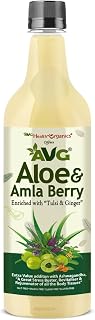


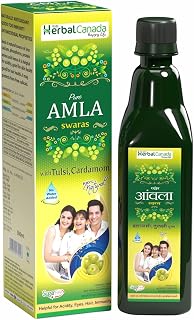


Choosing an herbal amla juice is not simply a matter of picking the bottle with the highest rating or the most attractive packaging. Amla juice products sold in India can differ considerably in ingredient lists, concentration, processing methods, serving size, added sweeteners, preservatives, flavouring, packaging and storage requirements. A careful comparison can help you identify a product that fits your preferences instead of relying on marketing language alone.
Amla, also known as Indian gooseberry or Phyllanthus emblica, has a long history of use in Indian traditional wellness practices. Modern amla juice products are available in several forms, including ready-to-drink juices, concentrated liquids, herbal blends and formulations combined with ingredients such as aloe vera, tulsi, ginger or other botanicals. Because formulations vary, the product label should always be treated as the primary source for product-specific information.
A useful comparison should look beyond popularity. When evaluating amla juice for an Indian buyer, consider the following factors together:
Indian shoppers may encounter established herbal and wellness brands such as Patanjali, Dabur, Baidyanath, Kapiva and WOW Life Science when researching amla-based products. These brands may offer different formulations and pack sizes, so the brand name alone should not determine the purchase decision.
Always compare the specific product label, ingredient list, serving instructions, packaging date, expiry or best-before information and current customer feedback for the exact variant you are considering. A brand can have several products with different formulations, and one product should not automatically be treated as identical to another product from the same company.
The front of a bottle often highlights terms such as “herbal,” “natural,” “pure,” “traditional,” “concentrated” or “wellness.” These descriptions can be useful for identifying the intended positioning of a product, but they do not by themselves tell you how much amla is present or how the product was formulated.
For a meaningful comparison, turn the bottle around and read the detailed label. Look for the ingredient declaration, serving size, net quantity, storage instructions, manufacturer details, batch information and date markings. If a product contains several botanicals, determine whether you specifically want a single-ingredient amla juice or a multi-herb formulation.
“Amla juice” and “amla extract” should not automatically be treated as interchangeable terms. A juice is generally presented as a liquid food or beverage product, whereas an extract can refer to a preparation produced through a different processing method and may be used at a different concentration. The appropriate comparison depends on the product's complete formulation and serving instructions.
A concentrated product may require dilution before consumption, depending on the manufacturer's directions. Concentration can make a bottle appear smaller than a ready-to-drink product while still providing multiple servings. This is why comparing bottle volume alone can produce a misleading value calculation.
Ready-to-drink products can be convenient because they generally require less preparation. However, convenience should be balanced against storage requirements, serving size, ingredients and taste. Once opened, follow the manufacturer's storage instructions carefully.
One of the most important buying decisions is whether you want an amla-focused product or a broader herbal blend.
A single-ingredient formulation can make label comparison easier. If your primary interest is amla itself, a simpler ingredient list may help you understand exactly what you are purchasing. It can also make it easier to avoid ingredients you may not want.
Some products combine amla with other botanicals. These formulations may appeal to shoppers looking for a broader traditional herbal beverage, but additional ingredients also make comparison more complicated. Review every ingredient instead of evaluating the product based only on its amla content.
The ingredient list deserves more attention than promotional claims on the front label.
Amla naturally has a distinctive tart, sour and astringent taste. Individual products can taste quite different depending on the formulation, dilution, added ingredients and processing. A product that tastes very different from another does not necessarily indicate that either product is better or worse.
If taste is important to you, read recent customer feedback specifically for comments about flavour, bitterness, sweetness, acidity and aftertaste. Reviews are most useful when multiple customers describe the same characteristic rather than when a single review makes an isolated claim.
The cheapest bottle is not always the most economical option. A better approach is to calculate the approximate cost per serving.
For concentrated products, also account for the quantity used per serving and any recommended dilution. Two bottles with identical volumes can provide very different numbers of servings.
Liquid herbal products need more attention to storage than many dry grocery products. Before buying, check whether the bottle needs refrigeration after opening, whether it should be protected from direct sunlight, and how long the manufacturer recommends using it after opening.
Inspect the package when it arrives. Avoid using a product if the container is damaged, leaking, unusually swollen or otherwise inconsistent with normal packaging. Check the seal and date information before opening.
Packaging material can influence convenience, transportability and handling. Glass can feel substantial but may be heavier and more fragile. Plastic packaging can be lighter and easier to transport, but buyers who have specific packaging preferences should check the exact product specification rather than assuming every variant uses the same material.
Terms such as “natural,” “herbal” and “organic” should not be treated as synonyms. They can describe different aspects of a product or its ingredients. If organic certification is important to you, look for appropriate certification information rather than relying solely on the word “organic” in promotional copy.
Likewise, “herbal” does not automatically mean that a product contains only one botanical ingredient. A herbal formulation can contain several plant-derived ingredients, so the complete ingredient list remains important.
A high average rating can be useful, but it does not reveal everything about a product. Some buyers may value taste while others care more about ingredient simplicity, packaging or serving convenience. Read a range of reviews and look for recurring themes.
Marketing terminology should not be used as a substitute for the ingredient declaration. Compare the actual formulation and serving information.
If you prefer an unsweetened product, do not rely on the product name alone. Check the ingredient list and nutrition information where provided.
A large bottle can have a different recommended serving size from a smaller bottle. Cost per serving gives a more meaningful comparison.
Buying a liquid product without checking its storage requirements can create unnecessary inconvenience. Read the label before purchasing if refrigeration or special storage would be difficult.
Amla juice can vary substantially in flavour because of concentration, processing and other ingredients. If you are sensitive to sour or astringent flavours, customer feedback can be particularly useful.
Reviews are most valuable when used to identify patterns rather than isolated opinions. For an amla juice comparison, search reviews for recurring comments about taste, bottle leakage, seal quality, packaging, freshness, consistency, ease of use and whether the product matches its listed description.
Pay particular attention to reviews associated with the exact product variant and pack size you are considering. Online marketplaces can contain multiple variants under similar product titles, and customer experiences may not apply equally to every formulation.
A strong buying guide should help you answer practical questions before purchasing: Is this a single-ingredient product or a blend? Is it concentrated? Does it contain added sweeteners? How many servings are provided? What storage conditions are required? Is the packaging suitable for your routine? Does the current price make sense compared with similar products?
These questions are more useful than simply asking which product has the most impressive marketing claim. The best choice depends on the characteristics that matter most to the individual buyer.
Prioritise a short and clearly explained ingredient list. Compare the formulation of single-ingredient products with blends and check for sweeteners, flavouring and preservatives if those are concerns for you.
Consider ready-to-drink formats and packaging that fits your routine. Check serving instructions and storage requirements before deciding.
Place products side by side and compare net quantity, serving size, ingredients, concentration information, packaging, storage instructions and current cost per serving. This reduces the chance of choosing based only on brand recognition.
Calculate cost per serving rather than comparing only bottle prices. A larger pack may offer better value, but only if its formulation, serving size and shelf life make sense for your intended use.
Look for reliable customer feedback about taste and examine whether the formulation includes ingredients intended to alter the flavour. Do not assume that every amla juice has the same intensity.
Amla has a longstanding place in Indian traditional food and wellness practices. It is also widely used as an ingredient in traditional preparations, beverages and food products. However, traditional use and modern health claims should not be confused with evidence that a particular commercial juice will produce a specific health outcome.
For this reason, a responsible buying guide should focus on product composition, quality, usability and transparent labelling rather than promising guaranteed results. Consumers should be particularly cautious of products or advertisements that claim to diagnose, prevent or cure medical conditions.
If nutrition is important to you, examine the nutrition panel rather than assuming that a product is low in calories or sugar because it is herbal. Some formulations may contain added sweeteners or other ingredients that affect their nutritional profile.
People following specific diets should also check the complete ingredient and allergen information supplied by the manufacturer. If you have a medical condition, take prescription medicines, are pregnant or breastfeeding, or have been advised to restrict particular ingredients, consult an appropriately qualified healthcare professional before adding concentrated herbal products to your routine.
There is no universal serving size that applies to every commercial amla juice. Follow the preparation and serving instructions printed on the specific product you purchase. Some products are designed to be consumed directly, while others may be intended for dilution.
Do not increase the recommended serving simply because a product is marketed as natural or herbal. More is not automatically better, and different formulations can have different concentrations.
Some amla juice products may be intended for dilution, while others may be ready to consume. Follow the manufacturer's instructions for the exact product. If dilution is permitted, water can alter the intensity of the flavour and make a strongly tart beverage easier to drink.
The appropriate way to consume a product depends on its label directions. If the manufacturer provides specific preparation instructions, follow them. Avoid assuming that every amla juice is suitable for mixing with every beverage simply because it is a liquid.
If you are comparing ten or more products, create a simple scoring framework instead of relying on an overall impression. Give each product a separate assessment for ingredient transparency, amla formulation, serving convenience, packaging, storage requirements, customer feedback and value.
This method makes it easier to distinguish a product that is genuinely suitable for your requirements from one that simply has strong branding. Your final shortlist should reflect your own priorities.
There is no single best product for every buyer. The right choice depends on formulation, ingredient preferences, serving size, taste, packaging, storage requirements, budget and the current specifications of the product you are considering.
Indian shoppers may come across brands such as Patanjali, Dabur, Baidyanath, Kapiva and WOW Life Science. Product ranges and formulations can change, so compare the exact variant rather than choosing solely by brand.
Not necessarily. A single-ingredient product can be easier to evaluate if you specifically want amla, while a blend may suit someone who prefers multiple botanical ingredients. The better option depends on your preferences and the exact formulation.
Start with the ingredient list and serving information. Then check net quantity, storage instructions, date information, manufacturer details and any nutrition information provided.
Compare them on an equal basis: ingredients, amla formulation, serving size, number of servings, added ingredients, packaging, storage requirements and cost per serving. Customer reviews can then provide additional information about taste and packaging experience.
No. Price alone does not establish quality. A higher-priced product may have a different formulation, packaging format or serving size, but the value should be assessed using the complete product specification.
A concentrated product can be useful for buyers who prefer a particular serving format or want a product designed for dilution. Check the manufacturer's instructions and compare the number of servings before deciding.
Do not assume that an adult herbal juice is appropriate for children. Check the product's intended use and seek advice from a qualified healthcare professional when age-specific suitability is uncertain.
Follow the serving guidance for the specific product. If you plan regular use and have a medical condition, take medicines, or have dietary restrictions, discuss the product with a qualified healthcare professional.
Commercial amla juice is generally sold as a food, beverage or wellness product depending on its formulation and regulatory classification. It should not automatically be treated as a substitute for prescribed medical treatment.
It depends on the product. Some formulations may contain added sugar or other sweeteners, while others may not. Always check the ingredient and nutrition information for the exact variant.
Amla naturally has a strong tart and astringent character. Differences in concentration and formulation can also influence taste. Customer reviews can help you understand how a particular product is perceived by buyers.
The answer depends on the specific product. Follow the manufacturer's storage and after-opening instructions rather than applying a universal time period to every bottle.
The best way to choose an herbal amla juice in 2026 is to compare the exact product specifications rather than relying on a product name, brand reputation or headline marketing claim. Focus on transparent ingredients, appropriate serving information, packaging, storage requirements, customer feedback and cost per serving.
For a single-ingredient preference, look closely at the amla formulation and the rest of the ingredient list. For convenience, compare ready-to-drink and concentrated formats. For value, calculate the approximate cost per serving. For taste, use multiple recent customer reviews to identify consistent flavour patterns.
Before purchasing, verify the latest product details and current retailer information because formulations, pack sizes, prices and availability can change during 2026. A careful comparison gives you a better basis for selecting the product that fits your preferences and routine.